About 19 minutes
Benjamin Disraeli, the Earl of Beaconsfield, K.G. Cartoons from "Punch" 1843-1878 — Background and Themes
Art History
4,250 recorded words. 1 minutes difference from this book's estimate.
View Gutenberg source #44799
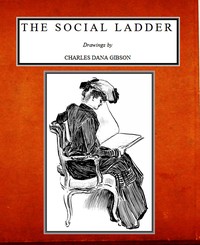
This digital edition of The Social Ladder Drawings by Charles Dana Gibson — A Reader’s Guide is described by source-level measurements including 3,953 words, 18 min estimated reading time, and 2 detected text sections.
The text analysis averages about 19.1 words per sentence, while the detected sections provide another way to judge how the source is divided.
Project Gutenberg metadata also associates the work with “Caricatures and cartoons -- United States,” connecting these edition facts with the source record’s subject description.
Explore this collection
These alternatives are selected using recorded categories and estimated reading time.
About 19 minutes
Art History
4,250 recorded words. 1 minutes difference from this book's estimate.
View Gutenberg source #44799About 16 minutes
Art History
3,481 recorded words. 2 minutes difference from this book's estimate.
View Gutenberg source #58813About 36 minutes
Art History
8,113 recorded words. 18 minutes difference from this book's estimate.
View Gutenberg source #2646Search stored excerpts and compare books → Choose by your preferences →
Choices use stored catalog measurements. Estimates vary with reading speed. A shared category is a catalog label, not a claim that two books have the same argument or literary quality.
Search reads excerpt text stored with this catalog and links to its associated Gutenberg record. The connection is stored in the site database; this tool does not recheck that every excerpt is word-for-word identical to that external record. Excerpt search does not cover every chapter and does not verify historical publication dates.
Catalog snapshot checked: 2026-09-25. Coverage: 93 public books, 93 available source excerpts.
Calculated from edition completeness, EPUB availability, text structure and catalogue metadata. Not a user rating.
Total of 100 points, scaled to a 2.5-5.0 range. Editions with an empty description or a missing EPUB file are not scored.
Public-domain source text
The source text is kept in the dedicated reader, separate from this catalogue record and its commentary.
Charles Dana Gibson’s The Social Ladder (1902) is a sequence of eighty-four cartoons that map the rituals and anxieties of New York’s upper class at the turn of the century. Rather than a single narrative, the book moves between recurring characters—Mr. and Mrs. Meeker, Mrs. Steele Poole, Mr. Grubbs—whose domestic and social predicaments form a loose, episodic anatomy of ambition. Gibson’s drawings rely on repeated structural devices: the reversal of expected roles, the compression of a story into a single caption, and the use of physical space (a doorway, a breakfast table, an opera box) to frame social transactions. The excerpts show a world where love is performed, hospitality is a burden, and sleep is a casualty of status.
Gibson populates his ladder with a small repertory company. Mr. Meeker, for instance, appears in at least two cartoons: in one, he objects to his wife using his room for the gentlemen’s things; in another, he takes revenge by developing a sudden enthusiasm for late nights, forcing Mrs. Meeker and the girls to wait on him. The captions treat these as instalments in an ongoing domestic cold war. Mrs. Steele Poole’s housewarming introduces a hostess whose event is the occasion for the cartoon, not its subject. Mr. Grubbs walks in his sleep and appears for the first and only time at an entertainment in his own house—a punchline that depends on the reader knowing the character’s usual invisibility. These figures are not developed in a novelistic sense; they are types whose situations are varied across the collection.
Each cartoon is built around a caption that functions as a compressed dramatic scene. In “Studies in Expression. An Imitation of the lady of the house,” the title itself is the joke: the drawing presumably shows someone mimicking the hostess. In “The Troubles of the Rich,” the caption reports that “at the last moment, several who were invited send their regrets”—the social slight is the entire content. Gibson often uses a single line of dialogue to invert expectation, as when a suitor claims to have attended every play, read every novel, gone into debt, and had his appendix removed “all for your sake.” The captions rarely describe the drawing; they provide the key to its irony, making the reader an interpreter of both text and image.
Gibson repeatedly uses the physical layout of the home to dramatize social hierarchy. Mr. Meeker’s room is commandeered for the gentlemen’s things; the opera box is imagined with a plate glass front so occupants “could still be seen, but not heard.” The breakfast table, the hallway, the bedroom—these become stages where power is negotiated. In “The Next Morning,” Mrs. Innittor Dedd’s maid reads aloud a newspaper account of her mistress’s appearance at a ball, complete with tiara, pearls, and rubies. The scene is not the ball itself but the aftermath, a private moment of public validation. Gibson’s settings are never neutral; they are the furniture of social performance.
The book’s structure is not chronological but thematic, grouping cartoons under headings like “Studies in Expression” or “The Troubles of the Rich.” Some pages are single images; others pair two or three on a spread. The effect is cumulative: a reader moves from a débutante’s song to a professor’s failed compliment to a sleepwalking husband. Gibson varies the pace by alternating single-panel gags with multi-part sequences (the Meeker saga) and by inserting short verses, such as the quatrain about the heiress who “cannot talk, she cannot sing, / She looks a fright.” The rhythm of the collection mirrors the social calendar—a series of events, each with its own minor crisis, none resolving into a larger plot.
Because the excerpts represent only a fraction of the eighty-four cartoons, readers should expect the full book to introduce additional characters and situations not sampled here. Gibson’s method rewards attention to repeated motifs—the maid reading the paper, the husband out of place, the party that goes wrong. The cartoons are best approached as a gallery of social types rather than a continuous story; each page offers a self-contained observation about the costs of climbing.
There’s a strange kinship between Gibson’s crisply drawn societal cages and Gordon’s dusty Kartoum journals—both are portraits of people performing for an audience they can’t quite see. Flipping through these plates, I kept thinking of that other book, The Journals of Major-Gen. C. G. Gordon, C.B., at Kartoum. — Story, Setting & Ideas, where duty becomes its own kind of gilded ladder. Neither world offers much escape, only the quiet exhaustion of keeping up appearances.
Save your reaction, strongest insight, and memorable passage.