About 75 minutes
Raemaekers' Cartoon History of the War, Volume 3 The Third Twelve Months of War — Key Ideas to Explore
Art History
17,192 recorded words. 0 minutes difference from this book's estimate.
View Gutenberg source #43219
The catalog record for Raemaekers' Cartoon History of the War, Volume 2 The Second Twelve Months of War — Story, Setting & Ideas provides practical reading context through 17,248 words, 1 hr 15 min estimated reading time, and 5 detected text sections.
The text analysis averages about 22.0 words per sentence, while the detected sections provide another way to judge how the source is divided.
Project Gutenberg metadata also associates the work with “World War, 1914-1918 -- Caricatures and cartoons,” connecting these edition facts with the source record’s subject description.
Explore this collection
These alternatives are selected using recorded categories and estimated reading time.
About 75 minutes
Art History
17,192 recorded words. 0 minutes difference from this book's estimate.
View Gutenberg source #43219About 36 minutes
Art History
8,113 recorded words. 39 minutes difference from this book's estimate.
View Gutenberg source #2646About 19 minutes
Art History
4,250 recorded words. 56 minutes difference from this book's estimate.
View Gutenberg source #44799Search stored excerpts and compare books → Choose by your preferences →
Choices use stored catalog measurements. Estimates vary with reading speed. A shared category is a catalog label, not a claim that two books have the same argument or literary quality.
Search reads excerpt text stored with this catalog and links to its associated Gutenberg record. The connection is stored in the site database; this tool does not recheck that every excerpt is word-for-word identical to that external record. Excerpt search does not cover every chapter and does not verify historical publication dates.
Catalog snapshot checked: 2026-09-25. Coverage: 93 public books, 93 available source excerpts.
Calculated from edition completeness, EPUB availability, text structure and catalogue metadata. Not a user rating.
Total of 100 points, scaled to a 2.5-5.0 range. Editions with an empty description or a missing EPUB file are not scored.
Public-domain source text
The source text is kept in the dedicated reader, separate from this catalogue record and its commentary.
Louis Raemaekers' second volume of wartime cartoons does not simply collect images; it embeds them within a carefully constructed editorial framework. Each cartoon is preceded by a short prose passage—often a quotation from a newspaper, a government proclamation, or a literary source—that sets the tone for the visual satire to follow. This interplay between text and image creates a layered reading experience, where the reader must weigh the documentary evidence against the cartoonist's exaggeration. The volume's structure, moving from the King of Belgium's response to the Pope through to the death of Kitchener, mirrors the chronological progression of the war's second year, but the editorial voice consistently frames events through a lens of moral outrage and patriotic resolve.
The editor, James Murray Allison, does not remain invisible. His voice emerges in the selection and arrangement of source materials, which range from a German proclamation about deportations from Lille to a French official report on the same events. By placing these documents side by side, Allison invites the reader to compare official narratives. The inclusion of Marie Corelli's impassioned prose from The Sunday Times—with its biblical cadence and condemnation of 'the wickedest war'—further amplifies the emotional register. The editorial voice is consistently partisan, aligning with the Allied cause, yet it avoids direct commentary within the cartoon captions, allowing the juxtapositions to speak for themselves.
The volume's pace is driven by the accumulation of specific, often grim, details. The section on the deportations from Lille, for example, includes the exact number of deportees (25,000), their ages (16 to 55), and the military units involved (Infantry Regiment 64). This documentary precision contrasts with the broader symbolic strokes of the cartoons. Similarly, the account of Sir Roger Casement's landing includes the name of the submarine (U-19), the collapsible boat, and the coded message. These concrete facts anchor the reader in historical reality before the cartoon offers a satirical interpretation. The rhythm alternates between dense factual passages and the visual shorthand of the cartoons, creating a staccato effect that mirrors the war's own disjointed progress.
Certain motifs recur across the volume, linking disparate events. The figure of the 'Death's Head Hussar' at Verdun is described in the accompanying text as a 'fatal obsession,' a phrase that echoes the earlier depiction of the Kaiser's relentless pursuit of victory. The cartoon 'The Last Throw' is paired with a speech from the Prussian War Minister about 'hammer blows,' reinforcing the image of a nation expending its reserves. The theme of deception runs through several entries: the German proclamation about voluntary work in Lille is immediately contradicted by the French report of forced removal. The reader is trained to look for the gap between official language and actual practice, a gap that Raemaekers' cartoons exploit with savage humor.
Readers approaching this volume should attend to the interplay between the documentary excerpts and the cartoons. The editor's selections are not neutral; they construct a particular narrative of the war. Noting which sources are included—and which voices are absent—reveals the volume's rhetorical strategy. The cartoons themselves reward close reading for their visual symbols and allusions, which often extend beyond the immediate caption. This is a work of propaganda, but one that demands an active, questioning reader.
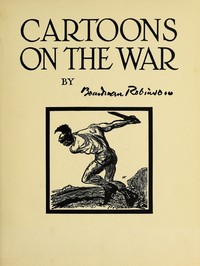
That grey afternoon, Raemaekers’ furious ink and Allison’s clipped commentary merged into a strange, damp stillness. I kept staring at one cartoon of a shuttered house, and somehow the propaganda’s anger softened into something quieter—the weight behind the lines. Later, idly, I reached for Cartoons on the War — Background and Themes, and found the same shadows, just lit from another angle.
Use these questions to collect your thoughts before moving on.