About 18 minutes
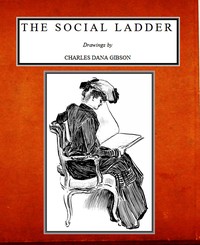
The Social Ladder Drawings by Charles Dana Gibson — A Reader’s Guide
Art History
3,953 recorded words. 1 minutes difference from this book's estimate.
View Gutenberg source #65026
For Benjamin Disraeli, the Earl of Beaconsfield, K.G. Cartoons from "Punch" 1843-1878 — Background and Themes, the stored edition analysis reports 4,250 words, 19 min estimated reading time, and 3 detected text sections.
The text analysis averages about 17.7 words per sentence, while the detected sections provide another way to judge how the source is divided.
Project Gutenberg metadata also associates the work with “Caricatures and cartoons -- Great Britain,” connecting these edition facts with the source record’s subject description.
Explore this collection
These alternatives are selected using recorded categories and estimated reading time.
About 18 minutes
Art History
3,953 recorded words. 1 minutes difference from this book's estimate.
View Gutenberg source #65026About 16 minutes
Art History
3,481 recorded words. 3 minutes difference from this book's estimate.
View Gutenberg source #58813About 36 minutes
Art History
8,113 recorded words. 17 minutes difference from this book's estimate.
View Gutenberg source #2646Search stored excerpts and compare books → Choose by your preferences →
Choices use stored catalog measurements. Estimates vary with reading speed. A shared category is a catalog label, not a claim that two books have the same argument or literary quality.
Search reads excerpt text stored with this catalog and links to its associated Gutenberg record. The connection is stored in the site database; this tool does not recheck that every excerpt is word-for-word identical to that external record. Excerpt search does not cover every chapter and does not verify historical publication dates.
Catalog snapshot checked: 2026-09-25. Coverage: 93 public books, 93 available source excerpts.
Calculated from edition completeness, EPUB availability, text structure and catalogue metadata. Not a user rating.
Total of 100 points, scaled to a 2.5-5.0 range. Editions with an empty description or a missing EPUB file are not scored.
Public-domain source text
The source text is kept in the dedicated reader, separate from this catalogue record and its commentary.
The collection of Punch cartoons targeting Benjamin Disraeli from 1843 to 1878 reveals a sustained visual and verbal campaign that shaped his public image. The illustrators—John Leech, Richard Doyle, and John Tenniel—employed a range of satirical devices, from allegorical tableaux to pointed caricature, to comment on Disraeli's political maneuvers. The accompanying captions and labels, often drawn from contemporary slang or literary allusion, amplify the visual critique. This note focuses on the authorial choices evident in the interplay between image and text, particularly in diction, dialogue, and descriptive framing.
The captions and speech bubbles in these cartoons deploy a lexicon that mocks Disraeli's rhetorical style. For instance, the label "Cheap-Jack" in the 1847 cartoon directly associates him with a flashy, dishonest salesman, echoing criticisms of his oratory as meretricious. Similarly, the 1848 cartoon titled "The Parliamentary Toots" uses a slang term for a dandy or fool, reducing his parliamentary presence to a figure of ridicule. The illustrators often borrow from theatrical or literary language—"Cock-a-Doodle-Doo" in 1849 evokes a boastful rooster, while "Will-o'-the-Wisp" suggests an elusive, deceptive figure. These verbal choices are not random; they consistently frame Disraeli as an outsider who relies on showmanship rather than substance.
The cartoons frequently employ allegorical figures to comment on Disraeli's policies. In "The Infant Hercules" (1845), he is depicted as a baby strangling serpents, a classical allusion that ironically undercuts his political strength. The 1846 cartoon "Young Gulliver and the Brobdingnag Minister" recasts him as a tiny figure confronting a giant, visually emphasizing his perceived insignificance. These metaphors are reinforced by descriptive titles that guide interpretation. The illustrators also use recurring visual motifs—such as measuring the British lion (1849) or dodging protectionist policies (1850)—to create a consistent symbolic language. The choice of allegory over direct representation allows for layered critique, inviting readers to decode the political commentary embedded in familiar stories.
The descriptive language in the cartoon titles and the accompanying biographical sketch reveals a deliberate effort to characterize Disraeli through his origins and career. The opening biographical note emphasizes his "Jewish extraction" and his authorship of Vivian Grey, a novel often seen as autobiographical, thus linking his literary and political personas. The list of cartoons includes titles like "A Political application of an old Fable" and "The Protection 'Dodge'," where the word "dodge" implies evasion and cunning. This diction consistently paints Disraeli as a manipulative figure. The illustrators' choice of words—"Cheap-Jack," "Toots," "Will-o'-the-Wisp"—creates a lexicon of disparagement that reinforces the visual satire. Even the formal biographical details are framed to highlight his rise from outsider to Prime Minister, a narrative that the cartoons both exploit and critique.
The arrangement of cartoons in chronological order from 1843 to 1878 creates a narrative arc of Disraeli's political career. The early cartoons focus on his entry into Parliament and his opposition to Peel, while later ones address his tenure as Prime Minister and his foreign policy, such as the Congress of Berlin. This sequencing allows readers to trace the evolution of satirical attacks in response to real events. The inclusion of a title page and list of cartoons functions as a table of contents, guiding attention to key moments. The illustrators' structural choice to begin with "The Infant Hercules" and end with later works suggests a deliberate framing of Disraeli's career as a cycle from youthful ambition to established power. The absence of cartoons from certain years may indicate periods of political calm or editorial shifts, but the overall structure emphasizes continuity in the satirical gaze.
Readers approaching this collection should attend to the interplay between visual detail and verbal label, as each cartoon is a composite of artistic and linguistic choices. The illustrators' consistent use of specific diction and allegorical framing reveals a coordinated editorial stance. By examining how these choices construct a public figure, one gains insight into Victorian political satire as a genre that blends entertainment with pointed commentary.
Those old Punch drawings catch Disraeli’s theatrical pomp, yet there’s a softness beneath the caricature. I often think of that same gentle eye in John Leech's Pictures of Life and Character — A Closer Reading, where ordinary folk breathe without mockery. Both volumes share a fondness for the human, even in satire. It’s a quiet companionship I’ve cherished for years.
Your answers remain private and are stored only in this browser.