About 777 minutes
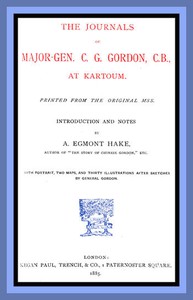
The Journals of Major-Gen. C. G. Gordon, C.B., at Kartoum. — Story, Setting & Ideas
Art History
178,699 recorded words. 68 minutes difference from this book's estimate.
View Gutenberg source #49224
For San Francisco Relief Survey; the organization and methods of relief used after the earthquake and fire of April 18, 1906 — Edition Insights, the stored edition analysis reports 162,954 words, 11 hr 49 min estimated reading time, and 32 detected text sections.
The text analysis averages about 21.3 words per sentence, while the detected sections provide another way to judge how the source is divided.
Project Gutenberg metadata also associates the work with “San Francisco Earthquake and Fire, Calif., 1906,” connecting these edition facts with the source record’s subject description.
Explore this collection
These alternatives are selected using recorded categories and estimated reading time.
About 777 minutes
Art History
178,699 recorded words. 68 minutes difference from this book's estimate.
View Gutenberg source #49224About 411 minutes
Art History
94,433 recorded words. 298 minutes difference from this book's estimate.
View Gutenberg source #32292About 380 minutes
Art History
87,247 recorded words. 329 minutes difference from this book's estimate.
View Gutenberg source #22689Search stored excerpts and compare books → Choose by your preferences →
Choices use stored catalog measurements. Estimates vary with reading speed. A shared category is a catalog label, not a claim that two books have the same argument or literary quality.
Search reads excerpt text stored with this catalog and links to its associated Gutenberg record. The connection is stored in the site database; this tool does not recheck that every excerpt is word-for-word identical to that external record. Excerpt search does not cover every chapter and does not verify historical publication dates.
Catalog snapshot checked: 2026-09-25. Coverage: 93 public books, 93 available source excerpts.
Calculated from edition completeness, EPUB availability, text structure and catalogue metadata. Not a user rating.
Total of 100 points, scaled to a 2.5-5.0 range. Editions with an empty description or a missing EPUB file are not scored.
Public-domain source text
The source text is kept in the dedicated reader, separate from this catalogue record and its commentary.
The survey repeatedly contrasts the organized relief apparatus with the habits of the displaced population. One passage notes that refugees 'consumed each day the daily wage, so were helpless when overtaken by the disaster,' framing poverty as a lack of foresight rather than a structural condition. This moralizing tone surfaces again when describing a camp where 'dissipation and moral degeneracy were conspicuous' among residents who had previously lived in 'very undesirable localities.' The authors do not merely report conditions; they evaluate character, revealing the era's assumptions about thrift and worthiness.
The survey defends the decision to build two- and three-room cottages without consulting the intended occupants. It states that 'those without resources of their own were not in a position wisely to suggest the manner of their housing,' a rationale that prioritizes efficiency over autonomy. The 'bonus' and 'grant and loan' schemes rewarded those with 'some means and initiative,' while the destitute received standardized shelter. Critics argued for equal distribution of funds, but the survey counters that the chosen policy was 'more feasible as well as more expedient.' This tension between equity and practicality runs throughout the report.
A detailed account of a leased lot reveals the precarious finances of informal housing. The landlady, a Mexican woman, paid $100 for sewerage, but poor installation led to water leaks and rising rents—from 50 cents to $1.15 per family. Ground rent was $5–6 per month, but added garbage and water charges brought total costs comparable to better cottages elsewhere. The survey notes that the landlady 'regretted the undertaking' after accepting 'such a helpless class of tenants.' This microcosm illustrates how private enterprise and charitable intervention intersected, often with unsatisfactory outcomes for both parties.
The survey frequently blends social analysis with moral judgment. In one camp, residents are described as suffering 'keen poverty, due in part to scarcity of work, but perhaps largely to intemperance and shiftlessness.' Men are seen idle 'while their women and children provided meager support.' These observations are presented as factual, yet they reflect the investigators' own standards of industriousness and family roles. The report does not question whether the disaster disrupted traditional labor patterns; instead, it attributes ongoing poverty to personal failings, a lens that shapes its policy recommendations.
Readers should approach this survey as a primary document of Progressive Era social science, where data collection served both to inform policy and to reinforce class hierarchies. The authors' frankness about their own reasoning—such as justifying top-down housing decisions—offers a window into the assumptions that guided early twentieth-century disaster relief. Pay attention to what the survey counts and what it judges; the numbers are never neutral.
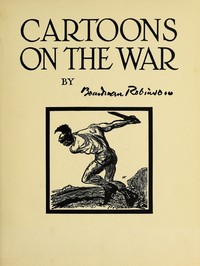
Reading through that old relief survey, I kept noticing how the planners' neat diagrams could never capture the messy, stubborn humanity in the tents. It reminded me of flipping through Cartoons on the War — Background and Themes last winter—those ink strokes catching the same gap between official purpose and everyday resilience. Different conflicts, same quiet truth about people simply enduring.
Save your reaction, strongest insight, and memorable passage.