About 18 minutes
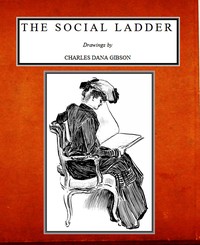
The Social Ladder Drawings by Charles Dana Gibson — A Reader’s Guide
Art History
3,953 recorded words. 2 minutes difference from this book's estimate.
View Gutenberg source #65026
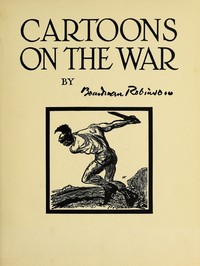
The source record for Cartoons on the War — Background and Themes measures this digital text at 3,481 words, 16 min estimated reading time, and 1 detected text section.
The text analysis averages about 21.0 words per sentence, while the detected sections provide another way to judge how the source is divided.
Project Gutenberg metadata also associates the work with “World War, 1914-1918 -- Caricatures and cartoons,” connecting these edition facts with the source record’s subject description.
Explore this collection
These alternatives are selected using recorded categories and estimated reading time.
About 18 minutes
Art History
3,953 recorded words. 2 minutes difference from this book's estimate.
View Gutenberg source #65026About 19 minutes
Art History
4,250 recorded words. 3 minutes difference from this book's estimate.
View Gutenberg source #44799About 36 minutes
Art History
8,113 recorded words. 20 minutes difference from this book's estimate.
View Gutenberg source #2646Search stored excerpts and compare books → Choose by your preferences →
Choices use stored catalog measurements. Estimates vary with reading speed. A shared category is a catalog label, not a claim that two books have the same argument or literary quality.
Search reads excerpt text stored with this catalog and links to its associated Gutenberg record. The connection is stored in the site database; this tool does not recheck that every excerpt is word-for-word identical to that external record. Excerpt search does not cover every chapter and does not verify historical publication dates.
Catalog snapshot checked: 2026-09-25. Coverage: 93 public books, 93 available source excerpts.
Calculated from edition completeness, EPUB availability, text structure and catalogue metadata. Not a user rating.
Total of 100 points, scaled to a 2.5-5.0 range. Editions with an empty description or a missing EPUB file are not scored.
Public-domain source text
The source text is kept in the dedicated reader, separate from this catalogue record and its commentary.
Boardman Robinson's Cartoons on the War collects drawings published mostly in a daily newspaper, as he notes in the prefatory statement. The cartoons, appearing from August 1914 through early 1915, respond to news as it broke, making no claim to a philosophical overview. Instead, they aim to convey a pointed conviction: that Germany bore chief responsibility for the conflict. The list of illustrations reveals a pattern of targets—German militarism, civilian suffering, and the gap between official rhetoric and reality. Titles such as “The Father and Mother,” “If the Dead Dream,” and “The Devil—Magnificent!” suggest a tone that mixes grief with sardonic commentary.
Robinson explicitly states that these drawings “represent the emotions evoked by the news from day to day.” This origin shapes their content: they are immediate reactions, not considered essays. The list of illustrations includes references to specific events and figures: Louvain (the burning of the Belgian library), the Crown Prince, and the Kaiser. One cartoon, “Our Operations Around —— Were Entirely Satisfactory,” mocks the vague language of military communiqués. Another, “The Hyphenated Americans—‘By hier iss Neutral!’” satirizes the stance of German-Americans. The daily newspaper format also explains the brevity of each image—a single panel, likely with a caption, designed for quick consumption.
Several motifs recur across the titles. The figure of Death appears in “The Reaper” and “Taps on the Aisne.” The Kaiser is depicted in multiple cartoons: “The Kaiser’s Terms of Peace,” “Forward with God!,” and “The Crown Prince—‘Father has Beaten me to it!’” which suggests a generational rivalry. Religious imagery is twisted in “I Believe in the Sword and Almighty God” and “The Devil—Magnificent! You have Never Carried out One of My Ideas More Thoroughly,” where the devil praises the Kaiser. The contrast between official piety and actual violence is a running theme. Civilian suffering is highlighted in “Belgium—The Return of the Goth,” “Louvain,” and “The Innocent Bystander.”
Robinson’s preface acknowledges that the cartoons “make no pretense to a philosophic viewpoint.” Their purpose is emotional and polemical, not analytical. The tone ranges from grim (e.g., “If the Dead Dream—August, 1914”) to sarcastic (e.g., “Villa—They Certainly Are Civilized Over There,” which likely contrasts European and Mexican violence). The audience is American readers of the New York Tribune and Harper’s Weekly, as noted in the copyright acknowledgments. The cartoons assume familiarity with current events and a general sympathy for the Allied cause. The collection as a whole offers a snapshot of how one American cartoonist processed the war’s early horrors through a lens of moral outrage.
Readers approaching this collection should keep in mind its origins: these are not neutral documents but wartime propaganda from an avowedly partisan viewpoint. The brevity of each cartoon means that meaning often depends on the caption and the reader’s knowledge of the referenced event. The absence of color and the reliance on line drawing focus attention on composition and symbolism. For those interested in the visual culture of World War I, Robinson’s work provides a direct, unfiltered record of one artist’s response to the conflict as it unfolded.
That rainy afternoon, Boardman Robinson’s stark ink lines seemed to echo the grey drizzle against my window—his anger at war’s machinery felt almost physical. Later, drying the pages, my hand drifted to a gentler volume, The Social Ladder Drawings by Charles Dana Gibson — A Reader’s Guide, where the same era’s social climbing felt like a quieter, sadder kind of trench.
Build a private reading journal entry for this title.