About 104 minutes
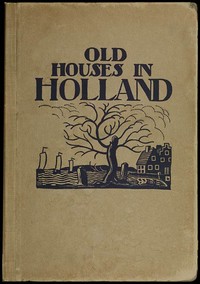
Old Houses in Holland — Text and Context
Design Photography
23,701 recorded words. 56 minutes difference from this book's estimate.
View Gutenberg source #60658

York Minster — Edition Insights can be approached with a clearer sense of reading commitment from its source measurements: 10,896 words, 48 min estimated reading time, and 2 detected text sections.
The text analysis averages about 29.9 words per sentence, while the detected sections provide another way to judge how the source is divided.
Project Gutenberg metadata also associates the work with “Cathedrals -- England,” connecting these edition facts with the source record’s subject description.
Explore this collection
These alternatives are selected using recorded categories and estimated reading time.
About 104 minutes
Design Photography
23,701 recorded words. 56 minutes difference from this book's estimate.
View Gutenberg source #60658About 132 minutes
Design Photography
30,275 recorded words. 84 minutes difference from this book's estimate.
View Gutenberg source #20191About 149 minutes
Design Photography
34,136 recorded words. 101 minutes difference from this book's estimate.
View Gutenberg source #27102Search stored excerpts and compare books → Choose by your preferences →
Choices use stored catalog measurements. Estimates vary with reading speed. A shared category is a catalog label, not a claim that two books have the same argument or literary quality.
Search reads excerpt text stored with this catalog and links to its associated Gutenberg record. The connection is stored in the site database; this tool does not recheck that every excerpt is word-for-word identical to that external record. Excerpt search does not cover every chapter and does not verify historical publication dates.
Catalog snapshot checked: 2026-09-25. Coverage: 93 public books, 93 available source excerpts.
Calculated from edition completeness, EPUB availability, text structure and catalogue metadata. Not a user rating.
Total of 100 points, scaled to a 2.5-5.0 range. Editions with an empty description or a missing EPUB file are not scored.
Public-domain source text
The source text is kept in the dedicated reader, separate from this catalogue record and its commentary.
The Dean of York, Arthur P. Purey-Cust, opens his account of York Minster with a striking metaphor: the cathedral has grown like a flower, from a small beginning, putting forth larger developments over time. He describes it as a 'thing of beauty' that has survived 'ruthless improvements and fanatical zeal and Puritan Philistinism and indiscriminating utilitarianism and ignorant restorations.' This defensive yet affectionate tone sets the stage for a work that is as much a personal meditation as a historical guide.
Purey-Cust’s narrative moves between the Minster’s origins—speculating about a possible British church from 180 AD—and its present state, with a particular focus on the vast collection of medieval glass. He notes that the Minster contains 25,531 square feet of medieval glass, more than half an acre, a possession he believes unequalled in England.
Purey-Cust does not present the Minster as a static monument but as a structure shaped by centuries of conflict. He lists the forces that have acted upon it: 'ruthless improvements,' 'fanatical zeal,' 'Puritan Philistinism,' and 'ignorant restorations.' Yet he suggests that these very forces have contributed to what the Minster is today. The building's history is one of adaptation and survival, not pristine preservation.
The author traces the Minster's development from a 'grain of mustard seed'—a possible British church—through successive architectural styles. He compares these styles to the seasons of the year, each leaving its influence. The narrative is not a dry chronology but an attempt to 'idealise the scenes' and recall the persons associated with the work, acknowledging that the Minster often 'far eclipsed the most sanguine anticipations of its founders.'
The most vivid section of the text concerns the Minster's stained glass. Purey-Cust describes a bewildering patchwork: windows composed of fragments from different dates, figures transplanted from their original contexts, and outlines filled with 'scraps of all kinds and subjects.' He notes that the Five Sisters window is an almost complete specimen of Early English glass, yet at its foot lies a panel of Norman glass portraying either Jacob's dream or Daniel in the lion's den—critics differ.
He catalogues the remnants: a 'beautiful and venerable head and shoulders of some grave ecclesiastic,' a 'dignified face with splendid crown and nimbus,' legs only with water flowing over the feet from a figure of St. Christopher. The glass becomes a palimpsest of the Minster's history, where each fragment tells a story of removal, preservation, and recombination.
Purey-Cust’s description of the Minster’s structure is marked by a sense of movement between spaces. He moves from the transept to the lantern to the Five Sisters' window, tracing the viewer’s eye upward and across. The lantern, a central tower space, is described in terms of its height and the play of light through its windows. The transepts, with their rose windows, are presented as both architectural and visual anchors.
This movement is not merely spatial but temporal: the author shifts between describing the Norman transept, the Perpendicular nave, and the Decorated chapter house. He notes how the stone tracery in the vestibule windows was 'specially designed' to suit old Norman glass, suggesting a deliberate integration of old and new. The building becomes a series of interconnected volumes, each with its own character and history.
Purey-Cust writes as both a custodian and a guide, his voice blending scholarly observation with personal affection. He admits when evidence is lacking: the origin of the Minster is 'a mere speculation,' and the Norman panel in the Five Sisters window is 'indistinct, and critics differ.' He does not claim certainty but invites the reader to join in the 'pleasure and interest' of recalling the gradual development.
The text is based on the author’s intimate knowledge of the building, but it is not a comprehensive history. The excerpts focus on the glass and the building’s growth, leaving other aspects—such as the crypt, the tombs, or the daily life of the cathedral—largely unmentioned. Readers should expect a selective, personal tour rather than an exhaustive survey.
Purey-Cust’s York Minster is best approached as a guided meditation by a devoted observer. The text rewards those who read slowly, tracing the author’s eye as it moves from a fragment of glass to a towering window, from a Norman panel to a Perpendicular canopy. The Dean’s voice—learned, affectionate, and occasionally wry—provides a unique lens through which to view this great building. Readers interested in the Minster’s stained glass will find particularly rich detail, though the work’s selective scope means it complements rather than replaces more systematic architectural studies.
That rainy afternoon, I kept returning to the Dean’s quiet awe before York Minster’s layered stone—how each century had built upon the last, almost conversationally. It made me wonder about humbler churches, their simpler accumulations. Later, quite by accident, I found The Ground Plan of the English Parish Church — Context and Discussion, and the same patient tracing of time felt close at hand.
Capture what you thought, learned, and would like to remember.