About 23 minutes
Humorists of the Pencil: Phil May — Text and Context
Architecture
5,255 recorded words. 3 minutes difference from this book's estimate.
View Gutenberg source #62969
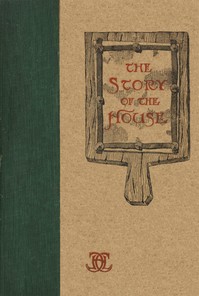
The story of the house — Reading Notes can be approached with a clearer sense of reading commitment from its source measurements: 4,523 words, 20 min estimated reading time, and 22 detected text sections.
The text analysis averages about 27.4 words per sentence, while the detected sections provide another way to judge how the source is divided.
Project Gutenberg metadata also associates the work with “Architecture, Domestic,” connecting these edition facts with the source record’s subject description.
Explore this collection
These alternatives are selected using recorded categories and estimated reading time.
About 23 minutes
Architecture
5,255 recorded words. 3 minutes difference from this book's estimate.
View Gutenberg source #62969About 15 minutes
Architecture
3,295 recorded words. 5 minutes difference from this book's estimate.
View Gutenberg source #54809About 14 minutes
Architecture
3,192 recorded words. 6 minutes difference from this book's estimate.
View Gutenberg source #32967Search stored excerpts and compare books → Choose by your preferences →
Choices use stored catalog measurements. Estimates vary with reading speed. A shared category is a catalog label, not a claim that two books have the same argument or literary quality.
Search reads excerpt text stored with this catalog and links to its associated Gutenberg record. The connection is stored in the site database; this tool does not recheck that every excerpt is word-for-word identical to that external record. Excerpt search does not cover every chapter and does not verify historical publication dates.
Catalog snapshot checked: 2026-09-25. Coverage: 93 public books, 93 available source excerpts.
Calculated from edition completeness, EPUB availability, text structure and catalogue metadata. Not a user rating.
Total of 100 points, scaled to a 2.5-5.0 range. Editions with an empty description or a missing EPUB file are not scored.
Public-domain source text
The source text is kept in the dedicated reader, separate from this catalogue record and its commentary.
The Story of the House opens with an epigraph from Ruskin’s “Seven Lamps of Architecture,” calling for dwellings “built to last and built to be lovely.” This sets a tone that is at once practical and aspirational. The brochure, issued by O.W. Ketcham of Philadelphia, is explicitly a catalogue of brickwork suggestions, yet its language often reaches toward the poetic. The title page itself is ornate, with decorative crosses and a full address, signaling a work that takes its craft seriously. The first section, “The Entrance Gates,” begins the sequence of illustrations that structure the book, each named with a mix of formality and whimsy—such as “Y e Hospitable Porch” and “My Lady’s Casement.”
The book’s structure is unusual: it is a trade catalogue, yet it opens with three epigraphs from Ruskin, Whitman, and Longfellow. Whitman’s “Song of the Broad Axe” describes masons at work, with “the flexible rise and fall of backs” and “the continual click of the trowels.” Longfellow’s “The Hanging of the Crane” celebrates a new household “like a new star just sprung to birth.” These literary quotations elevate the catalogue’s purpose, suggesting that brickwork is not merely functional but part of a larger cultural and domestic ideal. The epigraphs also hint at the book’s intended audience: builders and homeowners who value craftsmanship and tradition.
The ten illustrations listed in the contents form a kind of journey through a house: from the entrance gates, through the porch, hall fireplace, ingle-nook, library window, casement, gables and dormers, chimney-tops, loggia and terrace, to the garden sun-dial and exedra. This sequence suggests a narrative of moving through a dwelling, both inside and out. The illustrations themselves are not described in the excerpts, but their titles imply a focus on architectural details that combine brick with other materials. The note on materials explains that “consoles, pier caps, and carved portions” may be made of terra-cotta or stone, as a “perfectly legitimate combination.” This practical concession shows the catalogue’s grounding in real construction.
The prose shifts between straightforward catalogue language and more lyrical passages. The opening statement of purpose is direct: “to give simply a few suggestions of what may be accomplished by the use of plain and moulded brick.” But the epigraphs and the illustration titles introduce a slower, more reflective pace. The phrase “amid gables and dormers” or “among the chimney-tops” evokes a picturesque, almost romantic view of architecture. This alternation between the practical and the poetic creates a distinctive voice: the book is a sales tool, but one that insists on the beauty and permanence of its product. The reader is invited to see brickwork as both a craft and an art.
Readers should approach The Story of the House as a period piece that reveals late-19th-century attitudes toward domestic architecture and marketing. The illustrations are central to its argument, but the text itself rewards attention to its shifts in tone. The epigraphs are not mere decoration; they frame the catalogue as a contribution to a larger conversation about building well. The book is short—about 20 minutes to read—but its blend of commerce and culture offers a compact view of an era’s architectural ideals.
This Ketcham brochure made me think of my grandfather’s brick house, how the dust motes floated in his study light. Whitman’s lines felt like that same quiet hum. Later, reading Lectures on Art — Key Ideas to Explore, I caught that identical resonance — art as honest labor, not ornament. Both left me holding that strange, warm ache of permanence.
Build a private reading journal entry for this title.









