About 65 minutes
Rembrandt's Amsterdam — Themes and Context
Architecture
14,834 recorded words. 8 minutes difference from this book's estimate.
View Gutenberg source #31127
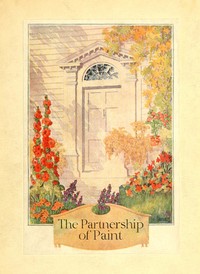
The partnership of paint — Context and Discussion can be approached with a clearer sense of reading commitment from its source measurements: 13,013 words, 57 min estimated reading time, and 10 detected text sections.
The text analysis averages about 20.1 words per sentence, while the detected sections provide another way to judge how the source is divided.
Project Gutenberg metadata also associates the work with “Interior decoration,” connecting these edition facts with the source record’s subject description.
Explore this collection
These alternatives are selected using recorded categories and estimated reading time.
About 65 minutes
Architecture
14,834 recorded words. 8 minutes difference from this book's estimate.
View Gutenberg source #31127About 49 minutes
Architecture
11,056 recorded words. 8 minutes difference from this book's estimate.
View Gutenberg source #74903About 66 minutes
Architecture
15,120 recorded words. 9 minutes difference from this book's estimate.
View Gutenberg source #68502Search stored excerpts and compare books → Choose by your preferences →
Choices use stored catalog measurements. Estimates vary with reading speed. A shared category is a catalog label, not a claim that two books have the same argument or literary quality.
Search reads excerpt text stored with this catalog and links to its associated Gutenberg record. The connection is stored in the site database; this tool does not recheck that every excerpt is word-for-word identical to that external record. Excerpt search does not cover every chapter and does not verify historical publication dates.
Catalog snapshot checked: 2026-09-25. Coverage: 93 public books, 93 available source excerpts.
Calculated from edition completeness, EPUB availability, text structure and catalogue metadata. Not a user rating.
Total of 100 points, scaled to a 2.5-5.0 range. Editions with an empty description or a missing EPUB file are not scored.
Public-domain source text
The source text is kept in the dedicated reader, separate from this catalogue record and its commentary.
The opening of The Partnership of Paint personifies paint as a “Siamese Twin” and a “pal and benefactor,” immediately establishing a promotional yet folksy tone. The text imagines a world suddenly paintless—trains, motors, boats, houses—to dramatize paint’s ubiquity. This rhetorical gambit frames the manual as both practical and sentimental, a blend that persists throughout the excerpts.
The title’s “partnership” is literalized in the first chapter: paint is “our partner in all the affairs of life.” The author extends the metaphor by describing a freshly painted house that “smiles back at us a radiant smile of thanks.” This anthropomorphism is not decorative but structural—it turns a commercial product into a benevolent agent. The house itself becomes a dependent being that “implores us to brighten up its faithful face.” Such language softens the sales pitch into an emotional appeal, positioning the reader as a caretaker rather than a consumer.
The acknowledgments credit Mrs. Eda A. Oliver for “the pages on Interiors,” and the excerpts attributed to her show a markedly different voice—direct, prescriptive, and detail-oriented. She warns against “small junk” and declares that “the sins that are committed in the name of ‘bric-à-brac’ can never be atoned for.” Her advice is concrete: use low tables, arrange furniture in groups around fire or tea table, and avoid overhead lights in living rooms. She recommends “parchment lamp-shades” for bungalows and fitted slip covers with “corded seams and pleated valances.” These specifics contrast with the earlier chapter’s general enthusiasm.
A substantial portion of the interior section focuses on the bungalow, treated as a distinct type requiring “restful” design. The author advises against “too many colors” and suggests rotating decorations “as the Japanese—keep a lot in the closet and change them around.” The bungalow is divided into “primitive” and “permanent” subtypes, each with appropriate floor coverings: grass or fiber rugs for the former, Oriental or Chinese rugs for the latter. This taxonomy reveals an assumed audience with multiple homes or the means to choose, and a desire to codify taste for a specific architectural form.
The manual’s diction shifts between the grandiose and the colloquial. The opening chapter uses elevated phrases like “warp and woof of our every-day existence” and “circles made by a pebble, spreading ever wider.” Later, Oliver’s sections adopt an authoritative, almost scolding tone: “There is no Hades big enough!” for bric-à-brac sins. The contrast suggests two authorial voices—one corporate and philosophical, the other professional and exacting. The book thus builds authority through both emotional uplift and sharp judgment, a dual strategy that may reflect the partnership of the title.
Readers should note that the excerpts represent only the first half of the text; the later sections on exterior painting and practical application are not included here. The manual’s value lies in its period-specific advice and the interplay between its two authors. Pay attention to shifts in tone and specificity, which reveal the collaborative nature of the work.
The rain softened the window light while I read the 1920s manual, its earnest promises about dutch boys and paint sheen somehow cozy. By the last page, I felt the house itself as a quiet character, always needing tending. That mood carried me to The story of the house — Reading Notes the same afternoon, as if one set of walls naturally opened into another.
Build a private reading journal entry for this title.









