About 43 minutes
The Mentor: Famous American Sculptors, Vol. 1, Num. 36, Serial No. 36 — Background and Themes
Architecture
9,784 recorded words. 6 minutes difference from this book's estimate.
View Gutenberg source #49804
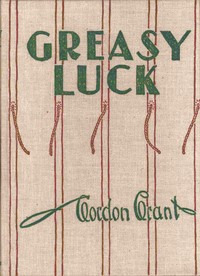
The catalog record for Greasy luck — Themes and Context provides practical reading context through 11,056 words, 49 min estimated reading time, and 64 detected text sections.
The text analysis averages about 23.9 words per sentence, while the detected sections provide another way to judge how the source is divided.
Project Gutenberg metadata also associates the work with “Whaling,” connecting these edition facts with the source record’s subject description.
Explore this collection
These alternatives are selected using recorded categories and estimated reading time.
About 43 minutes
Architecture
9,784 recorded words. 6 minutes difference from this book's estimate.
View Gutenberg source #49804About 41 minutes
Architecture
9,364 recorded words. 8 minutes difference from this book's estimate.
View Gutenberg source #47907About 57 minutes
Architecture
13,013 recorded words. 8 minutes difference from this book's estimate.
View Gutenberg source #68261Search stored excerpts and compare books → Choose by your preferences →
Choices use stored catalog measurements. Estimates vary with reading speed. A shared category is a catalog label, not a claim that two books have the same argument or literary quality.
Search reads excerpt text stored with this catalog and links to its associated Gutenberg record. The connection is stored in the site database; this tool does not recheck that every excerpt is word-for-word identical to that external record. Excerpt search does not cover every chapter and does not verify historical publication dates.
Catalog snapshot checked: 2026-09-25. Coverage: 93 public books, 93 available source excerpts.
Calculated from edition completeness, EPUB availability, text structure and catalogue metadata. Not a user rating.
Total of 100 points, scaled to a 2.5-5.0 range. Editions with an empty description or a missing EPUB file are not scored.
Public-domain source text
The source text is kept in the dedicated reader, separate from this catalogue record and its commentary.
Gordon Grant's Greasy Luck is not a narrative history but a sketch book—a sequence of captioned drawings that dissect the material culture of Yankee whaling in the 1850s. The title itself, a whaleman's toast to a successful voyage, signals the book's insider perspective. Grant, a marine artist, worked with the Whaling Museum of New Bedford and acknowledged Clifford W. Ashley's The Yankee Whaler as a key source. The result is a visual glossary of the trade: harpoons, lances, whaleboats, cutting-in gear, and the precise steps of the hunt, from the masthead shout to the final flurry.
The excerpts reveal a meticulous attention to procedure. The boatsteerer does not lift his harpoon and stand poised; instead he flexes his fingers or rubs his hands on his legs, waiting for the command. The act of darting the iron is compressed into a single sentence: “Like a flash he grasped his iron, and with every ounce of his strength darted it ‘up to the hitches.’” Grant's captions break the hunt into discrete phases—Sounding, Breaching, Lancing—each with its own risks and remedies. When a whale sounds, water must be thrown on the line to prevent fire at the loggerhead. The “drug” is a wooden contrivance used when a whale takes all the line from one boat. These are not romantic flourishes but functional details, the kind a sailor would know.
Grant's drawings, inferred from the captions, treat the whaleboat as a precision instrument. The tub and loggerhead are explicitly compared to a trout fisherman's reel: “the same tactics were employed as in trout fishing, except that the boat followed the whale at a speed of fifteen or more knots an hour.” The Nantucket sleigh ride is not a thrill but a practical problem—boats could be carried miles beyond the horizon, and crews might wait days to be picked up. The language is terse and technical: “short warp,” “running bowline,” “second iron,” “flukes.” Even the whale's death is described in procedural terms: “spouting red,” then a “flurry” of swimming in a diminishing circle until “fin out.”
Grant does not sentimentalize the whale, but he respects its power. A fighting bull sperm “would often turn and attack the boat, and only the skill of the boatsteerer kept it out of range of the snapping jaws and thrashing flukes.” Boats could be destroyed “at one mouthful,” and enraged whales would return to broken fragments “until they were reduced to matchwood.” The whale's reappearance after sounding is “dramatic and picturesque”—he rises “with the speed of an express train” and makes “a clean leap out of the water.” The danger is not abstract; it is written into the gear and the commands. The mate's lance thrust must reach the “life” in a single stroke, or the whale weakens through repeated wounds.
William McFee's foreword, written in 1932, positions whaling as a closed chapter of New England history. He contrasts the “sporting instinct” of the old whalemen—who worked on “lays” instead of wages—with modern factory ships of 14,000 tons. The foreword invokes Captain Ahab and the Pequod as romantic shorthand, but it also notes that most readers of 1932 were “unaware that whaling is still an industry.” McFee's introduction thus serves as a bridge between the heroic past and the industrial present, framing Grant's sketches as artifacts of a vanished pioneer mentality. The book itself, published by a small maritime press, is a deliberate act of preservation.
Readers should approach Greasy Luck as a visual field manual, not a story. The captions assume familiarity with whaling terms; a glossary of shipboard gear would be a useful companion. Grant's eye is on the how, not the why—the angle of a harpoon, the lay of a line, the stance of a boatsteerer. The book rewards slow looking, letting the drawings and their terse labels build a picture of a trade in which luck was greasy and skill was measured in inches and seconds.
Holding this sketchbook, I remembered my grandfather’s toolbox—each chisel worn to a familiar shape, the way he’d pause before touching one, as if reading its history. Grant’s careful lines feel that same quiet respect for tools. Lectures on Art — Key Ideas to Explore once gave me that same hushed feeling, where precision becomes its own kind of prayer. Neither book shouts; they just wait, patient as oiled wood.
Build a private reading journal entry for this title.









