About 35 minutes
Four Hundred Humorous Illustrations With Portrait and Biographical Sketch — Inside the Classic
Architecture
7,996 recorded words. 3 minutes difference from this book's estimate.
View Gutenberg source #44801
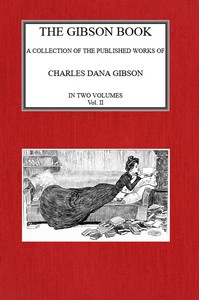
The Gibson Book: A Collection of Published Works of Charles Dana Gibson. Vol. II — A Reader’s Guide can be approached with a clearer sense of reading commitment from its source measurements: 7,316 words, 32 min estimated reading time, and 5 detected text sections.
The text analysis averages about 12.8 words per sentence, while the detected sections provide another way to judge how the source is divided.
Project Gutenberg metadata also associates the work with “Caricatures and cartoons,” connecting these edition facts with the source record’s subject description.
Explore this collection
These alternatives are selected using recorded categories and estimated reading time.
About 35 minutes
Architecture
7,996 recorded words. 3 minutes difference from this book's estimate.
View Gutenberg source #44801About 36 minutes
Architecture
8,145 recorded words. 4 minutes difference from this book's estimate.
View Gutenberg source #37767About 37 minutes
Architecture
8,299 recorded words. 5 minutes difference from this book's estimate.
View Gutenberg source #69978Search stored excerpts and compare books → Choose by your preferences →
Choices use stored catalog measurements. Estimates vary with reading speed. A shared category is a catalog label, not a claim that two books have the same argument or literary quality.
Search reads excerpt text stored with this catalog and links to its associated Gutenberg record. The connection is stored in the site database; this tool does not recheck that every excerpt is word-for-word identical to that external record. Excerpt search does not cover every chapter and does not verify historical publication dates.
Catalog snapshot checked: 2026-09-25. Coverage: 93 public books, 93 available source excerpts.
Calculated from edition completeness, EPUB availability, text structure and catalogue metadata. Not a user rating.
Total of 100 points, scaled to a 2.5-5.0 range. Editions with an empty description or a missing EPUB file are not scored.
IN TWO VOLUMES Vol. II
NEW YORK: CHARLES SCRIBNER’S SONS R. H. RUSSELL 1906
Acknowledgment is here made to Messrs. Harper & Brothers (the publishers of seven of Mr. Gibson’s books), by special arrangement with whom this work is made possible.
Copyright, 1894, by R. H. Russell & Son.
Copyright, 1894, 1898, 1899, 1900, 1901, 1902, by Robert Howard Russell.
Copyright, 1897, 1903, 1904, 1905, 1906, by Charles Scribner’s Sons.
Charles Dana Gibson’s second volume collects five distinct series of drawings, each built around a recurring social type or situation. The book opens with “A Widow and Her Friends,” a sequence of thirty-six captioned panels that track a widow’s fluctuating moods—contemplating the cloister, deciding to die, finding consolation in her mirror—before she re-enters society. The captions act as a running commentary, often undercutting the image with irony: “She Finds That Exercise Does Not Improve Her Spirits” is followed by a drawing that likely shows her no happier. This interplay between text and image is the volume’s central mechanism.
The five series—“A Widow and Her Friends,” “The Social Ladder,” “The Weaker Sex,” “Everyday People,” and “Our Neighbors”—each target a different facet of upper-middle-class life. “The Social Ladder” traces ambition and status anxiety through characters like Mr. Diggs, who does not share his wife’s alarm over an imagined snake threatening their child. The joke hinges on misplaced priorities. “The Weaker Sex” reverses expectations: in one panel, a woman tells a man, “We are too poor to marry,” and he replies, “But I am worth a million, bah jove!”—the punchline deflating her concern. Gibson’s humor relies on the gap between what characters say and what the reader infers from their expressions and postures.
Gibson reuses character types across series: the widow, the blustering husband, the flirtatious young woman, the pompous doctor. In “A Widow and Her Friends,” Dr. Bottles appears multiple times, first as a medical advisor (“She Decides to Die in Spite of Dr. Bottles”), later as a dinner companion who reads aloud Miss Babbles’s latest work. The names themselves are generic yet pointed—Dr. Bottles, Miss Babbles, Mr. Waddles—suggesting types rather than individuals. Visually, Gibson favors crowded interiors and outdoor leisure scenes: skating, fishing, morning runs. The drawings often frame characters in groups, with one figure isolated for comic effect, as in “She Is Disturbed by a Vision Which Appears to Be Herself.”
Beyond the series, the volume includes standalone cartoons built around a single exchange. Many follow a question-and-answer format: “Have you met him socially?” / “Dear me, no. Only in a business way. I married his daughter.” The brevity of these pieces contrasts with the longer sequences, which track a narrative arc across multiple panels. “A Widow and Her Friends” moves from her retirement to her return to society, ending with “And here, winning new friends and not losing the old ones, we leave her.” This closure mimics a serialized story, yet each panel remains a self-contained gag. Gibson also experiments with captions that contradict the image, as in “She Longs for Seclusion and Decides to Leave Town for a Milder Climate”—the drawing likely shows her surrounded by people.
Gibson’s scenes shuttle between domestic interiors and public venues: the opera, the horse show, the skating rink, the courtroom. “A Box Party at the Opera” and “Opening of the Racing Season” depict fashionable gatherings, while “The Family Below” and “In the Country” turn to domestic life. The captions often comment on the transition: “While Preparing for the Journey She Comes Across Some Old Things That Recall Other Days” suggests a private moment of nostalgia before a public departure. This movement reinforces the social satire—characters behave differently in private than in public. In “The Agitator,” a speaker harangues a crowd, but the caption undercuts his rhetoric: “Who is it’s brought us here, I ask you?” The setting is ambiguous, but the joke is on the speaker’s self-importance.
Readers should approach this volume as a sequence of visual jokes rather than a continuous narrative. The captions are essential to the humor, often delivering the punchline or adding a layer of irony. Pay attention to recurring characters and settings—they form a consistent social world. Gibson’s linework is clean and expressive, with faces and postures carrying much of the comedy. The book rewards browsing: each drawing can stand alone, but the series structure gives it a cumulative satirical effect.
Reading those Gibson drawings, I kept noticing how much weight a single tilted head or barren mantelpiece could carry. It reminded me of another collection I once lingered over, A Sketch-Book of R. Caldecott's — A Reader’s Guide, where the quiet, unfinished lines felt just as full of unspoken story. Both leave you smiling at what’s not quite said.
Answer a few questions and save a private reflection on this device.









