About 87 minutes
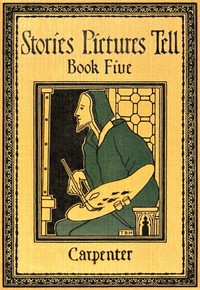
Stories Pictures Tell. Book 5 — Context and Discussion
Painting Sculpture
19,788 recorded words. 0 minutes difference from this book's estimate.
View Gutenberg source #63114
For Stories Pictures Tell. Book 4 — Reading Notes, the stored edition analysis reports 19,899 words, 1 hr 27 min estimated reading time, and 3 detected text sections.
The text analysis averages about 16.2 words per sentence, while the detected sections provide another way to judge how the source is divided.
Project Gutenberg metadata also associates the work with “Painters,” connecting these edition facts with the source record’s subject description.
Explore this collection
These alternatives are selected using recorded categories and estimated reading time.
About 87 minutes
Painting Sculpture
19,788 recorded words. 0 minutes difference from this book's estimate.
View Gutenberg source #63114About 87 minutes
Painting Sculpture
19,869 recorded words. 0 minutes difference from this book's estimate.
View Gutenberg source #63199About 98 minutes
Painting Sculpture
22,435 recorded words. 11 minutes difference from this book's estimate.
View Gutenberg source #63171Search stored excerpts and compare books → Choose by your preferences →
Choices use stored catalog measurements. Estimates vary with reading speed. A shared category is a catalog label, not a claim that two books have the same argument or literary quality.
Search reads excerpt text stored with this catalog and links to its associated Gutenberg record. The connection is stored in the site database; this tool does not recheck that every excerpt is word-for-word identical to that external record. Excerpt search does not cover every chapter and does not verify historical publication dates.
Catalog snapshot checked: 2026-09-25. Coverage: 93 public books, 93 available source excerpts.
Calculated from edition completeness, EPUB availability, text structure and catalogue metadata. Not a user rating.
Total of 100 points, scaled to a 2.5-5.0 range. Editions with an empty description or a missing EPUB file are not scored.
Public-domain source text
The source text is kept in the dedicated reader, separate from this catalogue record and its commentary.
Flora L. Carpenter's Stories Pictures Tell. Book 4 opens with a practical problem: teachers lacked time to research the paintings assigned in art curricula. Carpenter, a drawing instructor, responded by compiling lessons that supply both historical background and pointed questions designed to guide students' looking. The book treats each picture as a text to be read, with attention to posture, setting, light, and expression.
The excerpts reveal a consistent method. For Millet's The Sower, Carpenter asks what the man carries, how he dresses, and what the glow in the sky suggests about time of day. For Boughton's Pilgrim Exiles, she notes the length of shadows, the half-bare branches, and the arrangement of figures. These observations are not left as open-ended prompts; they are followed by interpretive paragraphs that connect visual details to narrative and emotional meaning.
Carpenter's lessons begin with a battery of questions, but these are not generic. They target specific, observable features: the sower's boots, the way he wears his hat, the softness of the ground. In Pilgrim Exiles, she asks what the three figures' postures and gazes reveal. The questions train the eye to notice composition—where light falls, how shadows indicate time, what the background contains. They also push toward inference: the sower's long day is deduced from the glow behind him; the season in Pilgrim Exiles is read from bare branches and warm clothing.
This method assumes that looking is a skill that can be taught. Carpenter does not simply supply facts; she models how to extract them. The questions are sequenced to move from simple identification (what is the man doing?) to interpretation (what do you like best about this picture?). The teacher or student reader is led step by step, building a reading of the image from discrete observations.
Each painting is placed within a story. For Pilgrim Exiles, Carpenter recounts the Pilgrims' hardships—the baby Oceanus born at sea, the reliance on supply ships, the threat of Indian attacks. This historical context is not background; it is used to interpret the figures' expressions. The man's fixed gaze is read as homesickness mixed with resolve; his wife's hand on his shoulder becomes a gesture of comfort; the seated mother's clasped hands suggest patience. Carpenter is careful to tie these readings to visible cues: the Puritan dress, the rocky shore, the distant houses.
Yet the narrative is not allowed to overwhelm the visual. Carpenter returns to formal elements—the arrangement of lights and shadows, the circular movement of the eye from faces to ocean to rocks. The story and the composition are presented as mutually reinforcing. The reader is shown how historical knowledge can deepen visual analysis without replacing it.
Carpenter's text repeatedly invites the reader to imagine the scene beyond the frame. In Pilgrim Exiles, she describes the moment when the ship's masts appear, the glad shout, the crowd on the beach. This is not in the painting; it is a projection, but one grounded in the details Carpenter has already established—the anxious waiting, the late afternoon light, the barren coast. The viewer is asked to complete the narrative, to feel the relief that the frozen moment anticipates.
This technique treats the painting as a single frame in a longer story. It encourages the student to think about what came before and after, to treat the image as evidence of a larger human experience. Carpenter's own language becomes more vivid in these passages, shifting from analysis to evocation. The effect is to make the picture feel alive, not static—a moment charged with past and future.
Carpenter's book is best used as a companion for looking, not a substitute. The questions reward slow, repeated examination of each painting. Readers may find it useful to cover the interpretive paragraphs and try answering the questions first, then compare their observations with Carpenter's. The historical notes are concise and relevant, but the real value lies in the method: learning to see by asking precise, answerable questions about light, posture, setting, and expression.
There’s a particular hush in those Millet questions, the way they ask you to notice the weight of late afternoon light. It reminds me of turning through The Madonna in Art — Reading Companion on a slow Sunday, not studying, just letting the quiet accumulate. Some books keep that stillness for you, long after you’ve put them down.
Build a private reading journal entry for this title.