About 69 minutes
Stories Pictures Tell. Book 2 — Background and Themes
Painting Sculpture
15,680 recorded words. 4 minutes difference from this book's estimate.
View Gutenberg source #32489

Stories Pictures Tell. Book 1 — Story, Setting & Ideas can be approached with a clearer sense of reading commitment from its source measurements: 14,869 words, 1 hr 5 min estimated reading time, and 2 detected text sections.
The text analysis averages about 15.2 words per sentence, while the detected sections provide another way to judge how the source is divided.
Project Gutenberg metadata also associates the work with “Painters,” connecting these edition facts with the source record’s subject description.
Explore this collection
These alternatives are selected using recorded categories and estimated reading time.
About 69 minutes
Painting Sculpture
15,680 recorded words. 4 minutes difference from this book's estimate.
View Gutenberg source #32489About 87 minutes
Painting Sculpture
19,899 recorded words. 22 minutes difference from this book's estimate.
View Gutenberg source #31411About 87 minutes
Painting Sculpture
19,788 recorded words. 22 minutes difference from this book's estimate.
View Gutenberg source #63114Search stored excerpts and compare books → Choose by your preferences →
Choices use stored catalog measurements. Estimates vary with reading speed. A shared category is a catalog label, not a claim that two books have the same argument or literary quality.
Search reads excerpt text stored with this catalog and links to its associated Gutenberg record. The connection is stored in the site database; this tool does not recheck that every excerpt is word-for-word identical to that external record. Excerpt search does not cover every chapter and does not verify historical publication dates.
Catalog snapshot checked: 2026-09-25. Coverage: 93 public books, 93 available source excerpts.
Calculated from edition completeness, EPUB availability, text structure and catalogue metadata. Not a user rating.
Total of 100 points, scaled to a 2.5-5.0 range. Editions with an empty description or a missing EPUB file are not scored.
Public-domain source text
The source text is kept in the dedicated reader, separate from this catalogue record and its commentary.
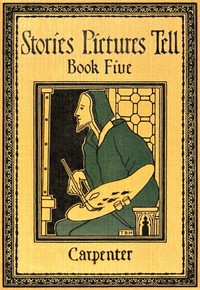
Flora L. Carpenter's Stories Pictures Tell. Book 1 opens each picture study with a set of questions designed to draw children's attention to specific visual details. For Millet's "Feeding Her Birds," she asks "What do you see in this picture?" and "What does the hen expect?"—prompts that guide observation toward narrative action and animal behavior. The questions are followed by a short story about the artist's life, often simplified to emphasize moral character: Millet is described as "quite poor" but "very happy," and Raphael as having "such a sweet nature that every one who knew him loved him." Carpenter's diction consistently frames artists as approachable figures, and her descriptions of paintings favor concrete, child-friendly details over formal analysis.
Carpenter's method relies on a structured sequence of questions that precede any explanatory text. For each painting, she lists between eight and twelve queries, many of which ask children to infer actions or emotions: "What do you think the children were doing before their mother called them?" or "Do you think she looks happy or frightened? why?" These questions are not open-ended but guide the viewer toward specific elements—the hen in Millet's picture, the dog in Reynolds's portrait of Miss Bowles. The phrasing assumes a shared visual field and encourages speculation grounded in observable details. Notably, Carpenter avoids technical art terms; she asks "What has she in her hair?" rather than querying about costume or composition. This approach positions the teacher as a facilitator of discovery rather than a lecturer, and it reflects Carpenter's stated goal of providing lessons that could be delivered in twenty to thirty minutes.
The artist biographies in this volume consistently highlight virtues such as hard work, kindness, and humility. Raphael is portrayed as a boy who "was never jealous or unkind toward others who did things better than he could do them" and who helped "poor artists." Millet's story emphasizes his love for "the country and of people who worked" and his happy family life despite poverty. Sir Joshua Reynolds is described as "the most delightful man in the world" who "loved children." These character sketches serve a pedagogical purpose: they present artists as role models whose personal qualities are as important as their artistic skill. Carpenter selects biographical details that reinforce the lesson's moral tone—Raphael's stepmother "was very good to him indeed," and his father taught him to care for his brushes. The anecdotes are simplified and occasionally sentimental, but they consistently tie the artist's character to the content of the paintings.
Carpenter treats each painting as a story frozen in a single moment. For "Feeding Her Birds," she describes a domestic scene: "In a tiny white cottage in a little village in France, lived a painter with his wife and nine children." This narrative frame extends the picture's implied action, imagining what happened before and after the depicted moment. Similarly, the entry on "Miss Bowles" begins with the child's imagined excitement at being painted by Reynolds: "How pleased little Miss Bowles must have been when her mamma and papa told her she was to go to the studio." The language is consistently in the past tense, and the descriptions often include invented dialogue or thoughts. Carpenter does not analyze brushwork or color; instead, she constructs a plausible backstory that makes the painting accessible to young readers. This approach aligns with the book's title—the pictures indeed "tell" stories, and Carpenter's role is to articulate them.
Each chapter follows an identical pattern: a heading with the painting's title and location of the original, a list of questions, a story of the picture, a story of the artist, and questions about the artist. This uniformity makes the book predictable for teachers and students alike. The questions about the artist mirror the earlier biographical narrative: "What kind of a boy was he?" and "Who taught him to draw and paint?" The repetition reinforces key facts—Raphael painted over forty Madonnas and two hundred eighty-seven pictures—while the consistent structure allows children to know what to expect. Carpenter also includes a "Review of Pictures and Artists Studied" at the end, suggesting that the lessons are cumulative. The book's organization by months (September and October, November, December, and January, etc.) implies a school-year pacing, and the preface notes that the lessons were "planned for the usual drawing period of from twenty to thirty minutes." This practical, time-bound design is central to the book's utility.
Carpenter's Stories Pictures Tell. Book 1 is best read as a period artifact of early twentieth-century art education. Its value lies not in art-historical accuracy but in its transparent pedagogical method: the question lists, the moralized biographies, and the narrative expansions of static images. Teachers using this book today might compare Carpenter's approach to contemporary visual literacy strategies, noting how her questions train attention on specific details while her stories humanize the artists. The book's brevity and repetitive structure make it easy to sample; reading two or three consecutive chapters reveals the formula clearly.
Leafing through Stories Pictures Tell, Book One, I lingered on Millet’s quiet fields and Carpenter’s gentle probing questions. It felt like sitting beside a patient teacher. That same unhurried warmth seemed to carry into its companion volume, Stories Pictures Tell. Book 2 — Background and Themes, where the background stories unfold with the same fond, attentive breath.
Save your reaction, strongest insight, and memorable passage.