
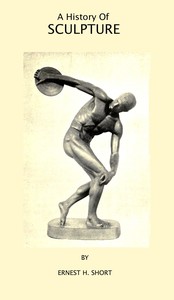
A History of Sculpture — A Closer Reading

(0 User reviews)   712
In Category - Architecture
Short, Ernest Henry, 1875-1959 Project Gutenberg 2021 Not confirmed
Sculpture -- History Readers of public-domain and historical texts
Project Gutenberg digital edition en

Edition facts

Words 93,949
Reading time 409 min
Text sections 26

A History of Sculpture — A Closer Reading can be approached with a clearer sense of reading commitment from its source measurements: 93,949 words, 6 hr 49 min estimated reading time, and 26 detected text sections.

The text analysis averages about 19.4 words per sentence, while the detected sections provide another way to judge how the source is divided.

Project Gutenberg metadata also associates the work with “Sculpture -- History,” connecting these edition facts with the source record’s subject description.

Explore this collection

Compare your next read

These alternatives are selected using recorded categories and estimated reading time.

Search stored excerpts and compare books → Choose by your preferences →

How these choices and excerpts are prepared

Choices use stored catalog measurements. Estimates vary with reading speed. A shared category is a catalog label, not a claim that two books have the same argument or literary quality.

Search reads excerpt text stored with this catalog and links to its associated Gutenberg record. The connection is stored in the site database; this tool does not recheck that every excerpt is word-for-word identical to that external record. Excerpt search does not cover every chapter and does not verify historical publication dates.

Catalog snapshot checked: 2026-09-25. Coverage: 93 public books, 93 available source excerpts.

Ernest H. Short's 1907 survey of sculpture emphasizes national and historical context over individual genius, arguing that great schools of sculpture are created by peoples, not artists. The narrative voice is interpretive, linking artistic shifts to broader cultural and educational changes, as seen in his discussion of Donatello and the Renaissance.
Share
Editorial Edition Score 4.9/5

Calculated from edition completeness, EPUB availability, text structure and catalogue metadata. Not a user rating.

How this score is calculated
  • Description quality20 pts
  • Title & short description10 pts
  • Source metadata20 pts
  • Text length15 pts
  • Chapters / structure15 pts
  • EPUB file integrity20 pts

Total of 100 points, scaled to a 2.5-5.0 range. Editions with an empty description or a missing EPUB file are not scored.

Edition quality

Public-domain source text

Read the source text

The source text is kept in the dedicated reader, separate from this catalogue record and its commentary.

Ernest H. Short opens his 1907 survey with a clear methodological stance: he will not write a conventional textbook. In the preface, he states that all great art is essentially national art and can only be understood through national and international history. This guiding principle shapes the entire work, as Short consistently interprets sculptural developments as products of social circumstances rather than individual genius. The narrative voice is that of a historian who sees art as an expression of collective identity, not a series of isolated masterpieces.

A Deliberate Departure from Textbook Conventions

Short explicitly distances himself from the typical art history manual. In the preface, he writes that he has not attempted to write a new textbook, but rather a history that gives more attention to the artistic interpretation of historical events and social circumstances than most historians have deemed necessary. This is not a modest claim; it is a programmatic statement. The result is a narrative that often lingers on political and educational contexts before turning to specific sculptures. For instance, when discussing Donatello, Short devotes considerable space to the Renaissance schoolmaster Vittorino da Feltre and his school 'The House of Joy,' arguing that the educational ideals of the period—producing all-round individuals—made possible the creation of statues that would have been meaningless a century earlier. This approach means that readers expecting a catalogue of works and artists will find instead a cultural history in which sculpture is one thread among many.

The Renaissance as a Shift in Mental Atmosphere

Short's treatment of the Italian Renaissance is a key example of his method. He rejects the notion that fifteenth-century sculptors simply copied Greek originals. Instead, he describes a 'wave of enthusiasm for Hellenic art and literature' that broke over Italy, humanizing sculptors and freeing them from Catholic dogma and scholasticism. He is careful to avoid attributing direct borrowings: 'One cannot point to the treatment of a fold of drapery here, or to the pose of a torso there, and refer it to a Greek original.' Rather, the influence was atmospheric. Short's language here is deliberately cautious, emphasizing that the change was in the mental and emotional climate, not in specific motifs. This nuanced argument reflects his broader conviction that art history must be written as the history of peoples, not of artists lifting ideas from one another.

Pace and Structure: From Broad Context to Specific Example

The book's pacing alternates between sweeping contextual passages and focused analyses of individual works. In the excerpt on Donatello, Short first establishes the educational revolution of the Renaissance, then turns to Donatello's David, describing it as sculpted 'in the round' and complete in itself, yet utterly un-Hellenic in sentiment. This movement from general to specific is characteristic. Short often builds a broad historical argument before grounding it in a single sculpture, which can make the narrative feel expansive but occasionally digressive. Readers should be prepared for long sections on social history before returning to the art itself. The effect is deliberate: Short wants the reader to understand the world that produced the sculpture before examining the sculpture itself.

Short's history rewards readers who are interested in the interplay between art and society. The narrative voice is that of a confident interpreter who sees patterns where others might see only isolated works. Because the book is organized by historical period rather than by artist or technique, it is best read sequentially. The illustrations mentioned in the title are not included in this digital edition, so readers may wish to have reference images available. Short's prose is clear and direct, free of jargon, making the book accessible to non-specialists.

Rain drummed on the windows while I lingered over Ernest Short’s argument that sculpture springs from a people’s collective spirit, not lone genius. That quiet conviction—craft as shared inheritance—stayed with me. Later, half-dreaming, I found myself thinking how a stage, too, is built by many hands, a communal frame for expression. It led me, almost accidentally, to On building a theatre Stage construction and equipment for small theatres, schools and community — A Closer Reading. The same patient, unglamorous care, just elsewhere.

There are no reviews for this eBook.

0
0 out of 5 (0 User reviews )

Add a Review

Your Rating *
There are no comments for this eBook.

Reader reflection

What did you think of this book?

Answer a few questions and save a private reflection on this device.

Your progress 0 / 10
1

Where are you in your reading?

2

How did the book work for you overall?

3

How likely are you to recommend this book?

4

How much effort did this book require?

Related eBooks









