
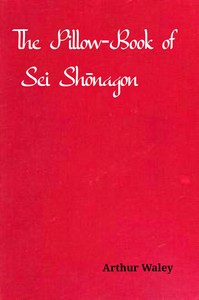
The pillow-book of Sei Shōnagon by Sei Shōnagon
Forget everything you know about a traditional book. 'The Pillow Book' is something else entirely. Written around the year 1000 by Sei Shōnagon, a lady serving Empress Teishi, this is a personal scrapbook of her life at court. There's no beginning, middle, or end. Instead, you'll find a vibrant mix of poetry, witty observations, diary-like anecdotes about court events, and—most famously—her brilliant lists.
The Story
There isn't a plot. Think of it as spending time with a fascinating, opinionated friend. One entry might describe the breathtaking beauty of a moonlit night, the next could be a funny story about a nobleman's embarrassing blunder, and then you'll hit a list like 'Things That Make the Heart Beat Faster' or 'Hateful Things.' Through these fragments, a world comes alive. We see the intense seasonal rituals, the intricate politics of fashion and poetry, and the quiet dramas of love and loss. The 'story' is the unfolding of a personality and a culture, piece by glittering piece.
Why You Should Read It
I love this book because it completely shatters the distance of history. Shōnagon feels immediate. Her voice is confident, sometimes catty, and full of strong likes and dislikes. When she complains about a visitor who overstays their welcome, you'll nod in agreement a thousand years later. Her lists are a joy—they're like ancient blog posts or tweets, capturing universal human experiences. Reading her, you realize that people haven't changed much. We still get annoyed by petty things, are moved by beauty, and try to present our best selves to the world. It's also a stunningly detailed portrait of a unique, rarefied world that was gone not long after she wrote.
Final Verdict
This is a perfect book for curious readers, not for those seeking a fast-paced story. If you enjoy historical diaries, clever cultural commentary, or just want to try something truly different, pick it up. It's fantastic for dipping in and out of—you don't have to read it straight through. Choose a modern translation with good notes (Ivan Morris's is a classic) to help with the references. Perfect for poetry lovers, history buffs who want the human side, and anyone who believes that a list of 'Things That Have Lost Their Power' can be profound.
This title is part of the public domain archive. It is now common property for all to enjoy.
Jennifer Wilson
7 months agoSolid information without the usual fluff.
Sarah Martinez
4 months agoI started reading this with a critical mind, the language used is precise without being overly academic or confusing. It cleared up a lot of the confusion I had previously.
Emily Smith
1 year agoIt took me a while to process the complex ideas here, but the insights into future trends are particularly thought-provoking. I feel much more confident in my knowledge after finishing this.
Jessica Moore
6 months agoI took detailed notes while reading through the chapters and the formatting on mobile devices is surprisingly crisp and clear. If you want to master this topic, start right here.


Karen Wilson
11 months agoThe methodology used in this work is academically sound.