About 41 minutes
Mr. Punch's "Animal Land" — Background and Themes
Architecture
9,364 recorded words. 2 minutes difference from this book's estimate.
View Gutenberg source #47907
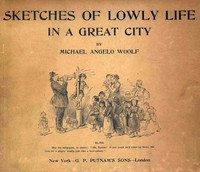
Sketches of lowly life in a great city — Inside the Classic can be approached with a clearer sense of reading commitment from its source measurements: 8,888 words, 39 min estimated reading time, and 94 detected text sections.
The text analysis averages about 18.9 words per sentence, while the detected sections provide another way to judge how the source is divided.
Project Gutenberg metadata also associates the work with “American wit and humor, Pictorial,” connecting these edition facts with the source record’s subject description.
Explore this collection
These alternatives are selected using recorded categories and estimated reading time.
About 41 minutes
Architecture
9,364 recorded words. 2 minutes difference from this book's estimate.
View Gutenberg source #47907About 37 minutes
Architecture
8,299 recorded words. 2 minutes difference from this book's estimate.
View Gutenberg source #69978About 36 minutes
Architecture
8,145 recorded words. 3 minutes difference from this book's estimate.
View Gutenberg source #37767Search stored excerpts and compare books → Choose by your preferences →
Choices use stored catalog measurements. Estimates vary with reading speed. A shared category is a catalog label, not a claim that two books have the same argument or literary quality.
Search reads excerpt text stored with this catalog and links to its associated Gutenberg record. The connection is stored in the site database; this tool does not recheck that every excerpt is word-for-word identical to that external record. Excerpt search does not cover every chapter and does not verify historical publication dates.
Catalog snapshot checked: 2026-09-25. Coverage: 93 public books, 93 available source excerpts.
Calculated from edition completeness, EPUB availability, text structure and catalogue metadata. Not a user rating.
Total of 100 points, scaled to a 2.5-5.0 range. Editions with an empty description or a missing EPUB file are not scored.
Public-domain source text
The source text is kept in the dedicated reader, separate from this catalogue record and its commentary.
The sketches in this volume, originally published in 1899, present a series of cartoons and captions focused on the lives of poor children in a large American city. The excerpts show a consistent use of working-class dialect and a humor that often turns on social pretensions, misunderstandings, and the gap between aspiration and reality. Despite the catalog classification under 'Architecture,' the text contains no architectural content; the subject appears to be a cataloging error. Instead, the work aligns with the catalog subjects of American wit and humor, poor children, and city life.
The captions rely heavily on nonstandard spelling and grammar to convey the speech of the characters. For example, one child says, 'none uv us ain’t able ter sleep uv a night,' while another asks, 'how’s that fer a dog-cart, eh?' This dialect is consistent across the excerpts, suggesting a deliberate effort to capture a specific sociolect. The humor often arises from the characters' attempts to navigate social hierarchies: Tilly MacAllister dismisses a newcomer because 'her father’s a butcher,' and a nurse refuses to care for 'Chinee h’infants.' These moments satirize class and ethnic prejudices among the poor themselves, rather than from an outside perspective.
Several sketches revolve around characters longing for something better, only to be thwarted. In 'A Holiday Dream,' Em’ly describes a vision of receiving a beautiful doll from Santa Claus, but wakes before she can grasp it, prompting the chorus to exclaim, 'Oh, what a shame! Didn’t yer want ter die?' Similarly, a boy outside a circus tent urges others to 'run home an’ get de money to come in even if yer have ter steal it,' highlighting the desperation for entertainment. The gap between desire and reality is a recurring note, often treated with a blend of humor and pathos.
The volume is edited by Joseph Henius, who in the introduction describes selecting 'the most characteristic' of Woolf’s contributions to Life and Judge, along with unpublished drawings. Henius emphasizes Woolf’s 'tenderness, sincerity, and simplicity' and his ability to move readers 'to tears as to laughter.' The excerpts suggest a loose collection of standalone pieces rather than a narrative arc. The biographical note indicates Woolf turned to 'delineation of child life among the poorer classes' in his later years, which aligns with the subject matter of the sketches.
The language and references place the work firmly in the late 19th century. Characters mention 'a Mary de Medicine collar,' 'the clothin’ fund,' and 'a striped suit' from fighting for six years—likely a reference to the Civil War. The sketch 'Ten Cents’ Worth' parodies sensational fiction, with Consuelo reading aloud a melodramatic passage that includes 'a nongshallnot manner' and 'a diluted nostril.' These details ground the humor in contemporary popular culture and social conditions, offering a window into the concerns and entertainments of the urban poor at the turn of the century.
Readers should approach this collection as a series of discrete vignettes rather than a continuous narrative. The humor depends on familiarity with the dialect and social dynamics of the period, which may require some adjustment. The editor’s framing suggests a memorial intent, but the excerpts stand on their own as artifacts of a specific comedic tradition. Those interested in the visual aspect should note that the Project Gutenberg text includes only the captions; the original drawings are not reproduced here.
I’ve shelved those New York street children beside me for so many years; their scrawny elbows and sharp tongues still feel near. That old book holds a similar warmth in my memory, a Spanish artistry in every crafted thing, each telling its own quiet story of hands at work. Both feel like whispers of lives once lived intensely, waiting patient as dust. The Arts and Crafts of Older Spain, Volume 3 (of 3) — Themes and Context rests beside it, a gentle companion in the hush.
Your answers remain private and are stored only in this browser.









