
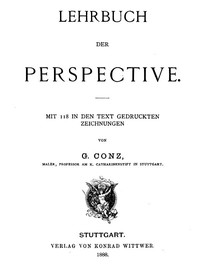
Lehrbuch der Perspective by Gustav Conz
Let's be clear from the start - this isn't a novel with characters and plot twists. 'Lehrbuch der Perspective' (which translates to 'Textbook of Perspective') is exactly what it sounds like: a practical guide to drawing in perspective published in 1897. But don't let that description fool you into thinking it's dry or boring.
The Story
There's no traditional narrative here, but there is a journey. Gustav Conz, an art professor, systematically teaches readers how to create the illusion of depth on a flat surface. He starts with the absolute basics - explaining horizon lines and vanishing points as if you've never held a pencil. Then he gradually builds up to more complex challenges: drawing staircases, arches, shadows, and full architectural scenes. The book is filled with detailed diagrams and step-by-step instructions. Think of it as a master class from a 19th-century expert, preserved exactly as students would have encountered it over a hundred years ago.
Why You Should Read It
Here's what surprised me: this old textbook feels incredibly relevant. The principles Conz explains are the same ones animators and video game designers use today to create 3D worlds. Reading it gives you this wonderful double perspective (pun intended) - you're learning practical drawing skills while also seeing how knowledge was organized and communicated in a different era. There's something quietly profound about following instructions written before cars or airplanes existed. Conz's voice comes through as patient and thorough, genuinely wanting his readers to understand. You can tell he believed these skills mattered.
Final Verdict
This book isn't for everyone. If you're looking for a page-turning thriller, keep looking. But if you're an artist curious about historical techniques, an architect interested in your field's foundations, a history lover who enjoys primary sources, or just someone who appreciates beautifully organized knowledge, you'll find something special here. It's a window into how people learned to see and represent their world. Perfect for readers who don't mind technical details and enjoy connecting with the past through practical skills. Just be prepared to actually think about what you're reading - this isn't casual bedtime material, but it's rewarding in its own unique way.
Legal analysis indicates this work is in the public domain. You can copy, modify, and distribute it freely.
Margaret Clark
2 years agoFinally a version with clear text and no errors.
Brian Miller
1 year agoI was skeptical at first, but the clarity of the writing makes this accessible. Don't hesitate to start reading.
Joseph White
1 year agoWithout a doubt, the character development leaves a lasting impact. A true masterpiece.
Sandra Lopez
2 years agoAfter finishing this book, it creates a vivid world that you simply do not want to leave. Absolutely essential reading.
Joshua Wright
1 year agoAfter hearing about this author multiple times, the depth of research presented here is truly commendable. I will read more from this author.