
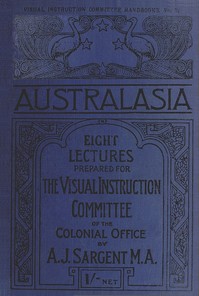
Australasia by A. J. Sargent
Published in 1912, Australasia by A.J. Sargent is part geography primer, part economic forecast, and a full snapshot of British imperial thinking. Sargent, an economist, sets out to describe Australia and New Zealand for a British audience, covering everything from sheep farming and mineral wealth to the character of the new 'British' societies being built there.
The Story
There isn't a plot in the traditional sense. Instead, Sargent systematically tours the region. He starts with the physical land—the vast outback, the fertile coasts, the strange wildlife. He then moves to its resources, celebrating the agricultural and mining potential. A significant portion discusses the people: the European settlers, their industries, and their governance. When he writes about the Indigenous Aboriginal and Māori populations, it is largely from a perspective of managed decline or assimilation, reflecting the pervasive attitudes of his era. The book concludes with a look at trade relations, positioning Australasia firmly within the British Empire's economic sphere.
Why You Should Read It
This book's value isn't in its factual accuracy by today's standards, but in its raw viewpoint. Reading Sargent is an exercise in historical empathy. You see the unquestioned assumptions of progress, empire, and racial hierarchy that shaped policy and perception. It’s not an easy read emotionally—you’ll likely wince at certain passages—but it’s a crucial one. It helps explain the foundations of modern Australia and New Zealand by showing you the intellectual bedrock they were built upon. It also, perhaps unintentionally, highlights the resilience of the cultures Sargent so casually dismisses.
Final Verdict
This is a specialist's book, but in the best way. It's perfect for history buffs, students of colonialism, or anyone from Australasia wanting to understand the historical narrative they inherited. It’s not a beach read; it’s a primary source. Pair it with a modern history of the region to get a powerful 'then and now' effect. If you approach it as a document of its time rather than a guidebook, you'll find it a short, sobering, and utterly compelling piece of the past.
This work has been identified as being free of known copyright restrictions. Enjoy reading and sharing without restrictions.
Elijah Lopez
1 year agoI didn't expect much, but the clarity of the writing makes this accessible. Don't hesitate to start reading.
Thomas Thomas
1 year agoThe formatting on this digital edition is flawless.
Barbara Hill
1 year agoVery interesting perspective.
Melissa Walker
1 year agoI was skeptical at first, but the narrative structure is incredibly compelling. This story will stay with me.